Key takeaway: Cleaning a Breville is a different job from descaling it: cleaning clears coffee oils and milk residue using the machine’s built-in tablet-based cleaning cycle (roughly weekly, or when the CLEAN/DESCALE light flashes), while descaling removes mineral scale and is a separate process entirely. Do both, on their own schedules, and wipe the steam wand and portafilter after every single use in between.
To clean a Breville coffee machine, run its built-in cleaning cycle with a Breville cleaning tablet roughly once a week (or whenever the CLEAN/DESCALE light flashes), wipe the steam wand and rinse the portafilter after every shot, and clean the conical burr grinder periodically to stop oil building up on the burrs. This is separate from descaling, which deals with mineral scale rather than coffee residue, and the two get confused constantly.
Daily Cleaning (After Every Use)
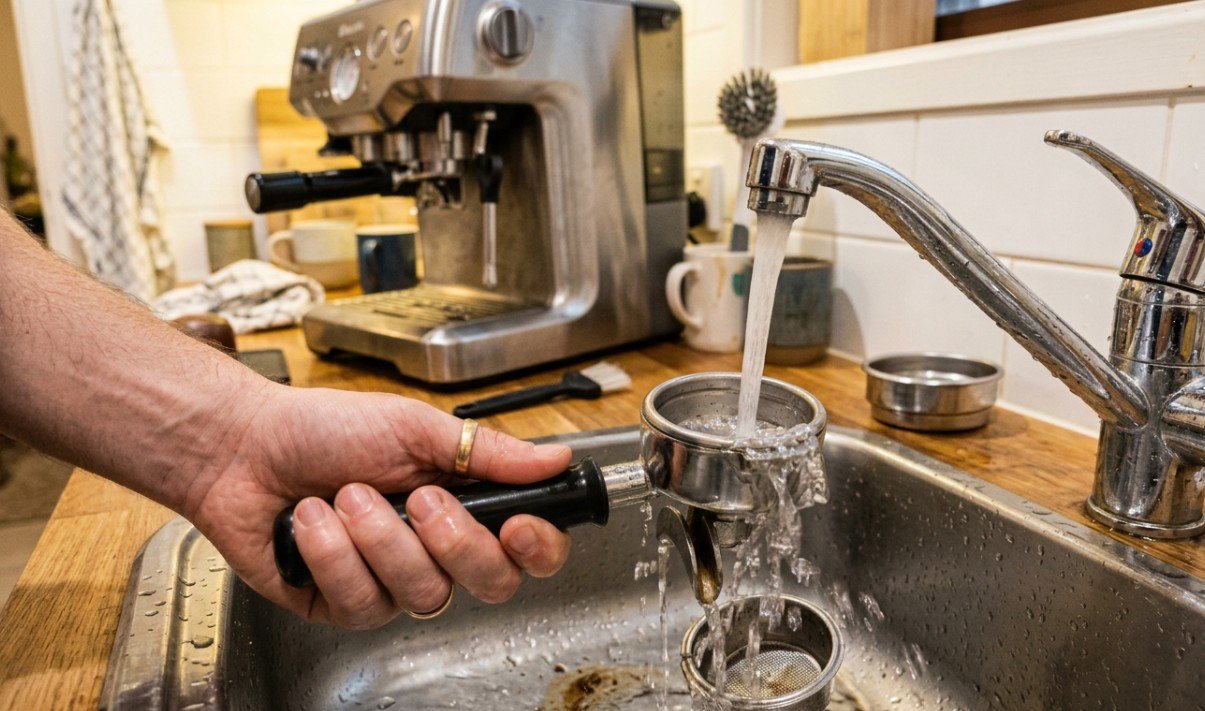
A few habits after every shot keep the bigger cleans further apart. Wipe the steam wand with a damp cloth as soon as you’re done texturing milk, then briefly turn the steam dial back on with the wand pointed into the drip tray to purge any milk sitting inside it. Dried milk is far harder to shift than fresh milk, so this takes seconds now or minutes later. Knock the spent puck out of the portafilter, give the filter basket a rinse, and empty the drip tray once the EMPTY ME indicator shows.
A scope note before you start: the cleaning cycle steps below are verified against the Barista Express. Other Breville machines can use a different button combination or cycle length for their own built-in clean, so check your own model’s manual if the steps here don’t line up with what your machine is showing.
The Built-In Cleaning Cycle (Weekly, or When the Light Flashes)
- Insert the cleaning disc into the 1-Cup or 2-Cup filter basket, then place the filter basket into the portafilter.
- Place one Breville cleaning tablet on top of the disc.
- Lock the portafilter into the group head.
- Turn the machine off at the power button.
- Press and hold the Power, 1-Cup and 2-Cup buttons together for 3 seconds to start the cycle.
- Let the cycle run, which takes around 5 minutes and finishes with two beeps.
- Remove the portafilter and check the tablet has fully dissolved. If it hasn’t, repeat the last two steps until it has.
Cleaning the Conical Burr Grinder
Coffee oil builds up on the conical burrs over time and eventually shows up as inconsistent grind size or a burnt, stale edge to the flavour, even with fresh beans. To clean the burrs, unlock and remove the hopper, run the grinder empty to clear remaining beans from the chute, then unlock and lift out the upper burr. Use the supplied burr brush to clean both the upper and lower burrs and the chute itself, then reassemble in reverse. Breville’s own troubleshooting guide reserves full disassembly, removing the grind fan and washers, for an actual blockage between the burrs and the outlet, since it involves handling burrs that are genuinely sharp. A brush-only clean is enough for routine maintenance. See our full coffee grinder cleaning guide for the general principles, including cleaning tablets, that apply beyond just this built-in grinder.
Cleaning the Steam Wand Properly
A steam wand that’s wiped and purged after every use rarely blocks. If milk does dry inside the tip, use the pin on the machine’s cleaning tool to clear the small hole. If that doesn’t fix it, unscrew the tip with the spanner built into the same cleaning tool and soak it in hot water before re-clearing the hole with the pin and screwing it back on.
Cleaning the Portafilter, Filters and Group Head
Run water through the machine with the portafilter and an empty filter basket in place every so often, to flush out coffee particles without any grounds present. If the fine holes in a filter basket become blocked, the same pin on the cleaning tool clears them, and running a full cleaning cycle with the portafilter and filter locked in gives them a proper clean rather than just a rinse.
Cleaning the Drip Tray and Outer Housing
The drip tray’s base and cover are dishwasher safe and should come out for a proper wash regularly, not just when the EMPTY ME indicator appears. The outer housing and cup-warming plate only need a soft, damp cloth followed by a dry one. Skip abrasive cleansers, scourers or scrubbing pads anywhere on the housing, since they’ll scratch the stainless finish.
Common Mistakes
- Putting parts in the dishwasher that aren’t rated for it. Only the drip tray base and cover are dishwasher safe on most models; check your own manual before the rest.
- Treating the weekly cleaning cycle as a substitute for descaling, or vice versa. They deal with two different problems and neither replaces the other.
- Letting milk dry inside the steam wand instead of purging it straight after use, which turns a five second wipe into a soak-and-unblock job.
- Ignoring the grinder until flavour noticeably drops off, rather than brushing the burrs periodically.
- Using an abrasive pad on the stainless housing, which leaves visible scratches that a soft cloth would have avoided.
Cleaning vs Descaling: Which One Do You Actually Need?
If you’re trying to work out which job you actually need, cleaning deals with coffee oils and milk residue and runs on the tablet-based cycle above. Descaling deals with mineral scale from your tap water and uses a completely different powder-based process; see our full guide on how to descale a Breville coffee machine for that side of it. A flashing CLEAN/DESCALE light generally means the cleaning cycle above is due; a solid light means it’s time to descale instead.
We’ll add a dedicated how-to-use guide and a full buying guide for choosing a coffee machine as this site builds out, so keep an eye out for those alongside the model-specific guides already up.
Frequently Asked Questions
What’s the difference between cleaning and descaling a Breville coffee machine?
Cleaning removes coffee oils and milk residue using the machine’s built-in tablet-based cycle, while descaling removes mineral scale from your water supply using a separate powder-based process. They run on different schedules and neither one replaces the other.
How do I run the cleaning cycle on a Breville machine?
Insert the cleaning disc and a cleaning tablet into the portafilter, lock it into the group head, turn the machine off, then hold the Power, 1-Cup and 2-Cup buttons together for 3 seconds. The cycle runs for about 5 minutes and finishes with two beeps.
Can I put Breville coffee machine parts in the dishwasher?
Only the drip tray’s base and cover are dishwasher safe on most models. Everything else, including the portafilter, filter baskets and water tank, should be hand washed.
How often should I clean the grinder on a Breville machine?
There’s no fixed schedule, but a brush-clean of the burrs whenever grind consistency or flavour starts to drift is enough for routine use. Full disassembly is only needed if there’s an actual blockage.
Why does my Breville’s steam wand keep getting blocked?
Usually because milk is left to dry inside it rather than being purged straight after texturing. Wipe the wand and briefly run steam into the drip tray every time you use it, and blockages become rare.
