
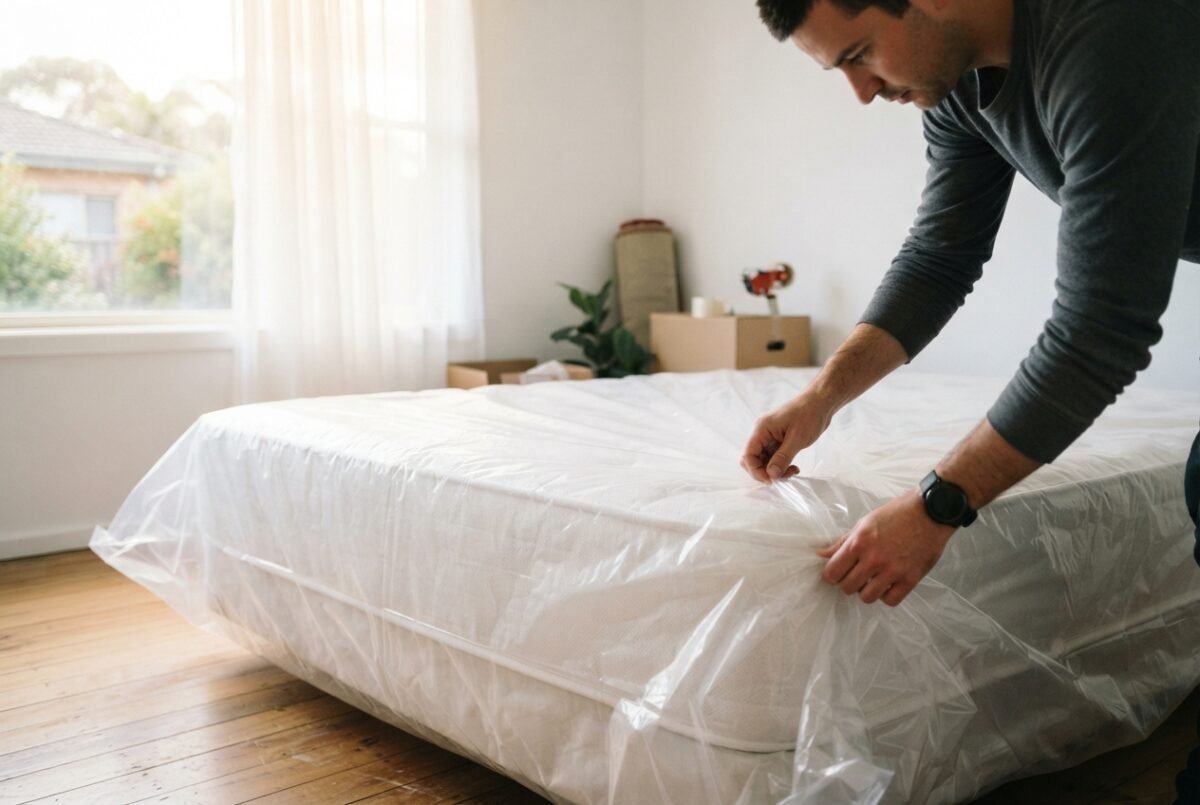
How to pack (and wrap) a mattress for moving: plan the route, strip and clean it, wrap it in a bag, then load it flat or on its long edge with nothing heavy on top. Never fold a spring or hybrid mattress, and keep every mattress dry. Two people is the safe way to lift anything bigger than a single.
Packing is the whole job from the empty bed to the new bedroom, not just the wrapping. This guide covers the order to do it in, how the method changes by mattress type and how to load and unpack. It sits in our Mattress Guides. The wrapping options are covered below.
How to pack mattress for moving by type
| Type | Fold it? | Packing note |
|---|---|---|
| Foam | No, unless the maker says so | Keep flat, avoid crushing |
| Innerspring | Never | Bend can break springs |
| Pocket spring | Never | Keep flat or upright |
| Hybrid | Never | Heavy, needs two people |
| Latex | No | Very heavy, plan the lift |
Our guides to the hybrid mattress and the latex mattress explain why those two weigh so much. Check the care label for any maker-specific rule.
What to wrap a mattress in
| Option | Best for | Watch out for |
|---|---|---|
| Mattress bag | Short moves and loading | Thin bags tear easily |
| Stretch wrap | Holding a bag or cover tight | Never on a damp mattress |
| Breathable cover | Storage and long moves | Gives less splash protection |
| Blankets or quilt | Padding corners and edges | Not waterproof |
| Cardboard | Protecting corners | Can shift if not taped |
A purpose-made mattress bag is the usual choice. It is thick enough to resist snags and often made to fit a particular size, so check yours matches the mattress. These wrapping methods are common removalist and maker advice, and we found no Australian standard for packing a mattress, so follow your maker’s care label if it says something different.
Pack it step by step
- Plan the route. Measure doorways, stairs and the lift, and decide where it will stand while you work.
- Strip and clean it. Remove bedding and the protector, then vacuum and let it air until dry.
- Check it is dry. Press a hand on the surface and sides. A damp mattress sealed in plastic can grow mould, so air it first if in doubt.
- Bag it. Fold cardboard or blankets over each corner and tape them lightly in place, slide the mattress into a heavy-duty mattress bag from one end with a helper, then fold the end over and tape it shut, keeping tape off the mattress fabric. A turn of stretch wrap around the middle stops the bag slipping.
- Add a carton if you have one. Removalists often supply a telescoping mattress carton for extra protection. Label the room and which side is the top.
- Lift with a partner. Carry it by the handles or edges, with the long side leading.
- Load it carefully. Lay it flat on top of the load or stand it on its long edge against a wall, and keep heavy items off it.
- Secure and keep it dry. Strap it so it can’t slide, and cover it if rain is possible.
- Unpack and air it. Remove the bag in the new room and let it breathe before you make the bed.
Lifting and loading safely
A mattress is bulky and awkward even when it is light. The model code for hazardous manual tasks treats heavy or awkward loads as a risk, so share the lift, keep the load close to your body and don’t twist while carrying.
Don’t stand a mattress on end for a long trip on a ute or trailer unless it is strapped at several points. Wind can lift it, and a loose mattress is a hazard to other drivers. See how to move a mattress for the vehicle rules. Don’t leave a mattress sealed in plastic for weeks either, because moisture can condense inside and a damp foam or fibre layer is hard to dry. For storage, use a breathable cover and read how to store a mattress.
What not to do
A spring mattress can be folded to fit in a car.
Folding bends the springs and can leave a permanent crease. Only foam compresses safely, and even then only if the maker allows it. Hire a vehicle that fits instead.
Wrapping it as tightly as possible protects it best.
Over-tight wrap can press into foam, mark the cover and trap moisture. Snug is enough. The aim is to keep dirt off and stop the bag shifting.
For a long move, check our guide to moving a mattress, and if you are putting it into storage first, see how to store a mattress. Our about page explains how we check sources.
For the lift itself, see how to carry a mattress by yourself.
Frequently asked questions
How do you pack a mattress for moving?
Clean it, bag it, pad the corners and load it flat or on its long edge. Keep it dry and don’t stack anything heavy on top.
Can you fold a mattress to move it?
Not a spring, hybrid or latex mattress, because folding can damage the springs and layers. Foam may compress if the maker allows it, so check the care label.
How do you pack a memory foam mattress for moving?
Wrap it in a bag and keep it flat, avoiding crushing or tight straps. Don’t compress it unless it came compressed and the maker allows it.
Should a mattress go flat or upright in a moving truck?
Either works if it is supported and strapped. Standing it on its long edge saves space, but keep it flat if the truck is open or the stack is unstable.
Do removalists pack mattresses?
Many do and often supply covers or cartons. Ask when you book, because some charge extra and rules differ between companies.
What do you wrap a mattress in for moving?
A heavy-duty mattress bag is the usual choice, with cardboard or blankets on the corners. Use stretch wrap only to hold a bag in place on a dry mattress.
Can you wrap a mattress in plastic?
Yes, for a short move. Plastic can trap moisture, so don’t leave a mattress sealed in it for long, and never wrap a damp one.
How do you wrap a mattress without a bag?
Use a clean bedsheet or quilt, then secure it with stretch wrap or tape on the wrap, not on the mattress. It gives less protection than a proper bag.
How do you wrap a mattress for storage?
Use a breathable cover rather than sealed plastic, and make sure the mattress is clean and dry first. Store it flat or on its side as the maker advises.