
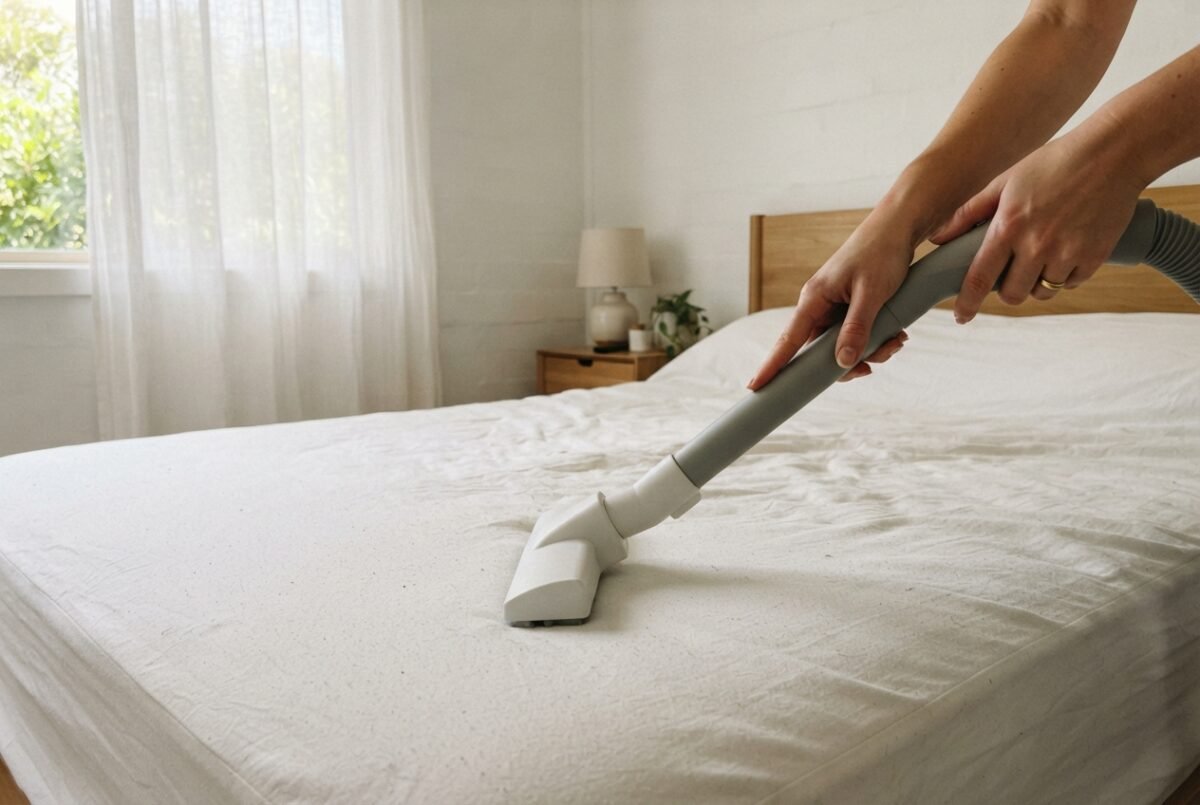
How to shampoo a mattress: vacuum it, test a small hidden patch, then dab a little diluted mild detergent onto the soiled spot and blot with a clean cloth. Use as little water as you can, because a wet mattress dries slowly and can grow mould. Never soak it or run a wet carpet machine across the whole surface.
Shampooing a mattress is spot cleaning, not a deep wash. This guide covers what you need, the method, how long to dry it and when to stop. It sits in our Mattress Guides, and the bigger routine is in how to care for a mattress.
This applies to foam, innerspring and hybrid mattresses with a non-removable cover. If your care label says spot clean only, or the cover is removable and washable, follow the label first. Foam holds moisture longest, so use even less liquid there.
What you’ll need
- A vacuum with an upholstery attachment.
- Mild dishwashing liquid, or an enzyme cleaner for organic stains.
- A spray bottle and two or three clean white cloths.
- A fan or open window, and somewhere dry to leave the mattress.
How to shampoo a mattress, step by step
- Strip and vacuum. Remove bedding, then vacuum the whole surface and the seams.
- Test first. Dab a small hidden patch with the cleaner and check for colour transfer.
- Dilute the detergent. Mix a few drops of mild dishwashing liquid in a cup of water.
- Apply sparingly. Spray or dab onto the stain, don’t pour it, and work from the edge inward.
- Blot, don’t rub. Press a clean cloth on the spot and lift. Repeat with a fresh cloth.
- Rinse lightly. Dab with a cloth dampened in plain water, then blot dry.
- Dry it fully. Stand it in a ventilated room, use a fan, and don’t put bedding back until it is dry.
Keep the mattress as dry as possible
CHOICE says it’s important to keep a mattress as dry as possible, especially foam, because foam lacks airflow and cleaning liquid can stay trapped inside. It says steam cleaning and shampooing should be done only very gently, with an upholstery nozzle, to avoid over-saturating it.
Don’t use a carpet shampooer or a steam cleaner across the whole mattress. Too much moisture can soak through to the layers, where it dries slowly and can lead to mould. Dry time varies with the room, the mattress and the amount of liquid, so be patient.
Shampooing is the best way to deep clean a mattress.
Soaking pushes dirt deeper and leaves moisture inside. Vacuuming, spot cleaning and a protector keep a mattress clean with much less risk.
When to stop and replace it
If a smell returns after drying, mould has appeared or a stain won’t shift, cleaning has reached its limit. Mould in a mattress is hard to remove, and our guide to how often to change a mattress lists the signs. For a fresh-up without water, see how to freshen a mattress. Our about page explains how we check sources.
Frequently asked questions
Can you shampoo a mattress?
Yes, but only as a gentle spot clean. Use a little diluted detergent on the stain, blot it up and dry the mattress completely.
Can you use a carpet cleaner on a mattress?
It’s risky. CHOICE says shampooing and steam cleaning must be very gentle because too much moisture is a problem, so avoid wet extraction on a whole mattress.
How long does a mattress take to dry after shampooing?
It depends on the room and how much liquid you used, so there is no fixed time. Use a fan and open windows, and keep bedding off until it is fully dry.
What can you use to shampoo a mattress?
Mild dishwashing liquid in water works for most spots, or an enzyme cleaner for organic stains. Test a hidden patch first.
Can you shampoo a memory foam mattress?
Only with very little liquid. Foam holds moisture, so dab, blot and dry it thoroughly rather than soaking.