
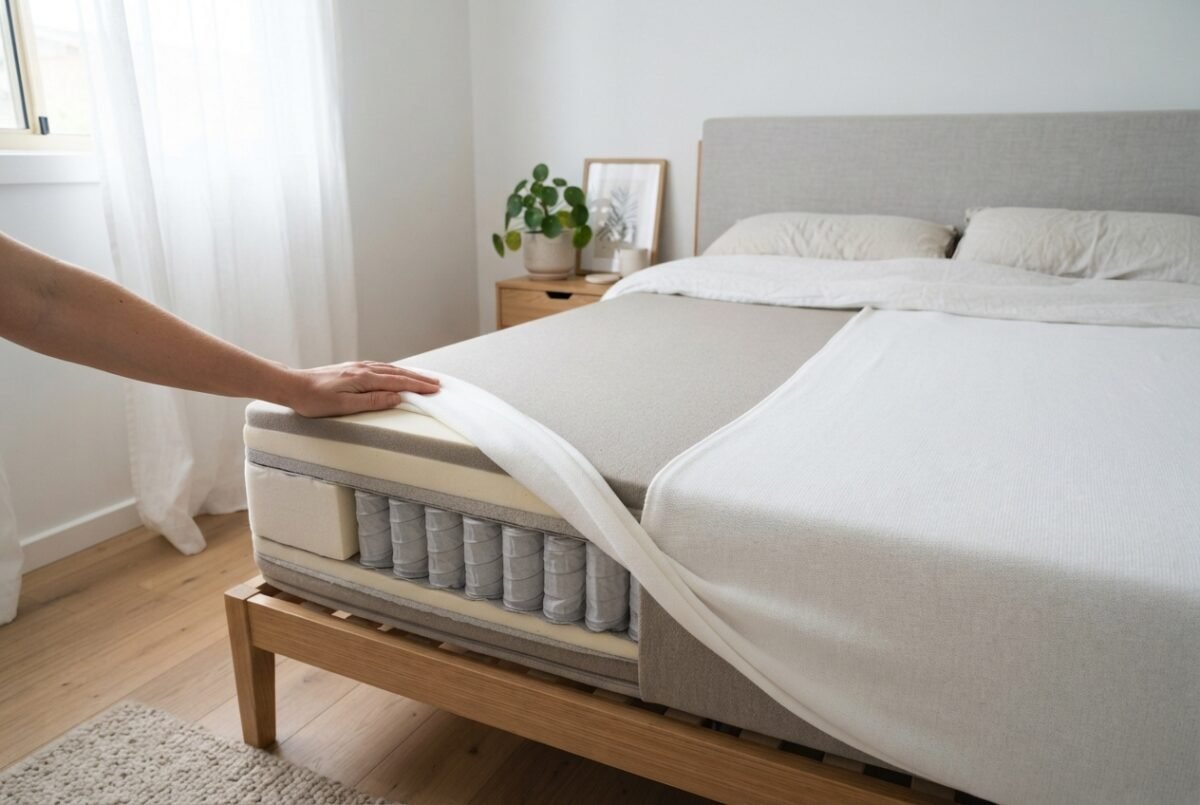
Foam vs spring mattress for back pain: neither type is proven better. Research points to medium firmness and good alignment, not a material. A foam mattress cushions pressure points, while a spring mattress often feels more supportive and stable. Choose by firmness and how your spine sits, and see a GP or physiotherapist for ongoing pain.
Back pain makes people look for a magic mattress, but the evidence is about firmness and condition, not foam or springs. This guide covers what research says, how each type tends to feel, what heavier sleepers should check and when to see a professional. It sits in our Mattress Guides.
This is general information, not medical advice. A mattress can’t treat a back condition. If pain lasts more than a few weeks, keeps getting worse, or comes with numbness, weakness or bladder or bowel changes, see a GP or physiotherapist.
Foam vs spring mattress for back pain: what research says
A 2021 literature review of 39 studies found a medium-firm mattress tends to promote comfort, sleep quality and spinal alignment compared with firmer options. The studies are mixed and don’t compare foam and spring cores directly, so the finding is about firmness.
In a 2003 trial of people with chronic low back pain, a medium-firm mattress outperformed a firm one over 90 days. Again, the result is about firmness, not the material under the cover.
How foam and spring differ for a sore back
| Factor | Foam | Spring |
|---|---|---|
| Pressure relief | Contours around hips and shoulders | Less contouring, depends on padding |
| Support feel | Can feel sunk in | Often more stable and lively |
| Alignment | Depends on density and thickness | Depends on spring type and padding |
| Sagging | Can leave body marks | Springs can wear unevenly |
| Heat | Holds warmth | Breathes better |
CHOICE testing found foam and spring mattresses perform about equally overall, and that spring mattresses more often scored well on stability. Layering matters more than the core, so compare models, not categories. Our memory foam vs spring mattress guide covers the wider comparison.
If you are a heavier sleeper
A heavier body compresses a mattress further, so a soft or thin one can bottom out and let the hips sag. CHOICE tests support on bodies of different sizes, including a larger 1.9 m, 100 kg frame, and results vary by model, so a mattress that suits a lighter person may not suit you.
In practice, look for a thicker, denser comfort layer or a firmer spring unit, and check that the mattress holds your hips level when you lie on your back and side. A sturdy base underneath helps too.
Don’t pick by type alone. A thin foam layer over weak springs can sag quickly under extra weight, whatever the label says. Read the layer list and the warranty limits on sagging before you buy.
How to choose, step by step
- Work out your usual sleeping position, since it decides how firm you need.
- Aim for medium to medium-firm if you have back pain, and avoid extremes.
- Check alignment: your hips and shoulders should sit level with the rest of your spine.
- Lie on it for at least ten to fifteen minutes, or use a trial period.
- Give a new mattress about two weeks before you judge it.
Our guides to whether a firm mattress is better for a bad back, whether spring mattresses cause back pain and how to choose mattress firmness go further, and our about page explains how we check sources.
Frequently asked questions
Is foam or spring better for back pain?
Neither is proven better. Research favours a medium-firm surface that keeps your spine aligned, whatever the material.
Is memory foam good for lower back pain?
It can be comfortable because it cushions pressure points, but it isn’t a treatment. Check it keeps your hips level and isn’t too soft.
Is a spring mattress better for a heavy person?
Not by type alone. A heavier sleeper needs a thick, dense comfort layer or a firmer, well-built spring unit, so compare specific models.
What firmness is best for back pain?
Medium-firm is the usual advice. A 2021 review and a 2003 trial both favoured it over firm.
When should I see a doctor about back pain?
See a GP or physiotherapist if pain lasts more than a few weeks, worsens, or comes with numbness, weakness or bladder or bowel problems.