
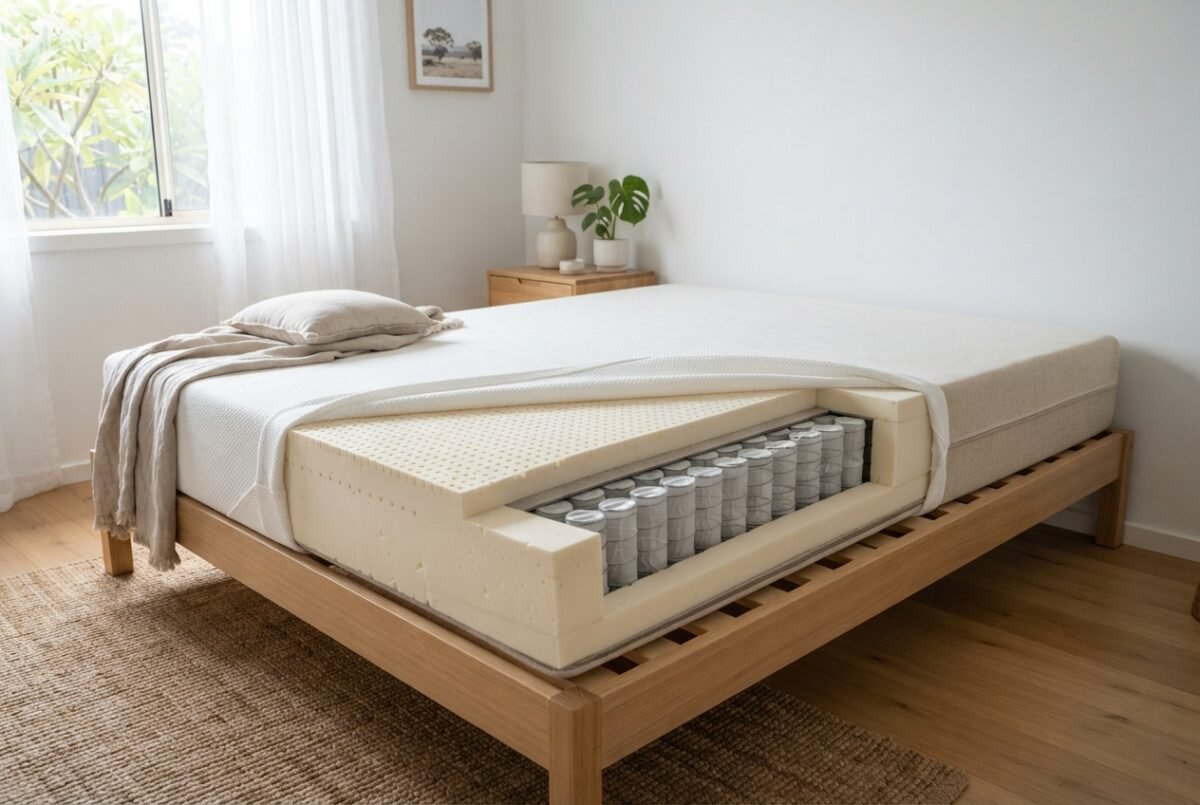
Latex vs spring mattress: latex is denser, heavier and more durable, with a solid, buoyant feel. A spring mattress is lighter, bouncier and usually easier to move. Both can sleep cool or warm depending on the build, so the layers matter more than the label. People with a latex allergy should ask a doctor first.
These are two very different ways to build a bed, and the choice usually comes down to feel, weight and how long you want it to last. This guide compares them on feel, heat, durability and allergy questions. It sits in our Mattress Guides.
This is a comparison of mattress types, not brands. Latex can be natural or synthetic, and springs can be pocket or linked, so models differ inside each group.
Latex vs spring mattress at a glance
| Question | Latex | Spring |
|---|---|---|
| Feel | Solid, buoyant, slow to sink | Springy, with bounce |
| Weight | Heavy | Lighter |
| Durability | Durable per CHOICE | Varies with the build |
| Airflow | Breathable, open-cell types | Good, with space between coils |
| Material | Natural or synthetic rubber | Steel coils with padding |
Our guide to the latex mattress covers the material in detail, and the pocket spring mattress guide does the same for springs.
How they feel and move
CHOICE describes latex as durable and breathable, with a solid feel. It pushes back evenly and doesn’t give the slow sink of memory foam. Springs add a livelier bounce, and in a pocket system each coil moves on its own.
Weight is a practical difference. Latex mattresses are generally heavier than other types, which makes them harder to turn, carry up stairs or fit through tight hallways. Check that you can move it before you buy.
Heat and durability
Neither type wins on heat automatically. CHOICE says cool mattresses come in latex, foam and spring versions alike, and that some supposedly cool models haven’t lived up to the name. Open-cell latex and pocket springs both help airflow.
On durability, latex has a reputation for lasting well, and CHOICE calls it durable. A spring mattress can also last, although the comfort layers above the coils often wear first. See how long a mattress lasts for ranges by type.
A natural latex mattress is always the healthier choice.
Some latex makers claim a mattress is 100 per cent organic, and CHOICE notes such claims vary. Natural also doesn’t mean allergy-proof, and a person with a natural rubber latex allergy needs advice before sleeping on it.
Natural rubber latex can trigger allergic reactions in some people. The ASCIA has information on latex allergy. If you are allergic, ask your GP or allergist before choosing a natural latex mattress.
Which one should you choose?
| If you | Consider |
|---|---|
| Want a firm, bouncy feel and a lighter bed | Spring |
| Want a dense, buoyant feel that lasts | Latex |
| Move your mattress often | Spring |
| Have a latex allergy | Spring, or ask your doctor |
If you can’t decide, a hybrid mixes both, as in what a hybrid mattress is. For the basics of feel, see how to choose mattress firmness, and our about page explains how we check sources.
Frequently asked questions
Is latex better than a spring mattress?
Neither is better overall. Latex is denser and more durable, while a spring mattress is lighter and bouncier. Choose on feel, weight and your own needs.
Is a latex mattress hotter than a spring mattress?
Not necessarily. CHOICE found cool and warm mattresses in latex, foam and spring types, so check how the specific model rates for warmth.
Does a latex mattress last longer than a spring mattress?
Latex has a reputation for durability, and CHOICE describes it as durable. A spring mattress can last well too, so build quality counts.
Are latex mattresses heavier?
Yes. CHOICE notes latex mattresses are generally heavier than other types, so make sure you can move yours.
Can you sleep on latex with a latex allergy?
Ask a doctor first. Natural rubber latex can cause allergic reactions in some people, and the ASCIA has information on it.