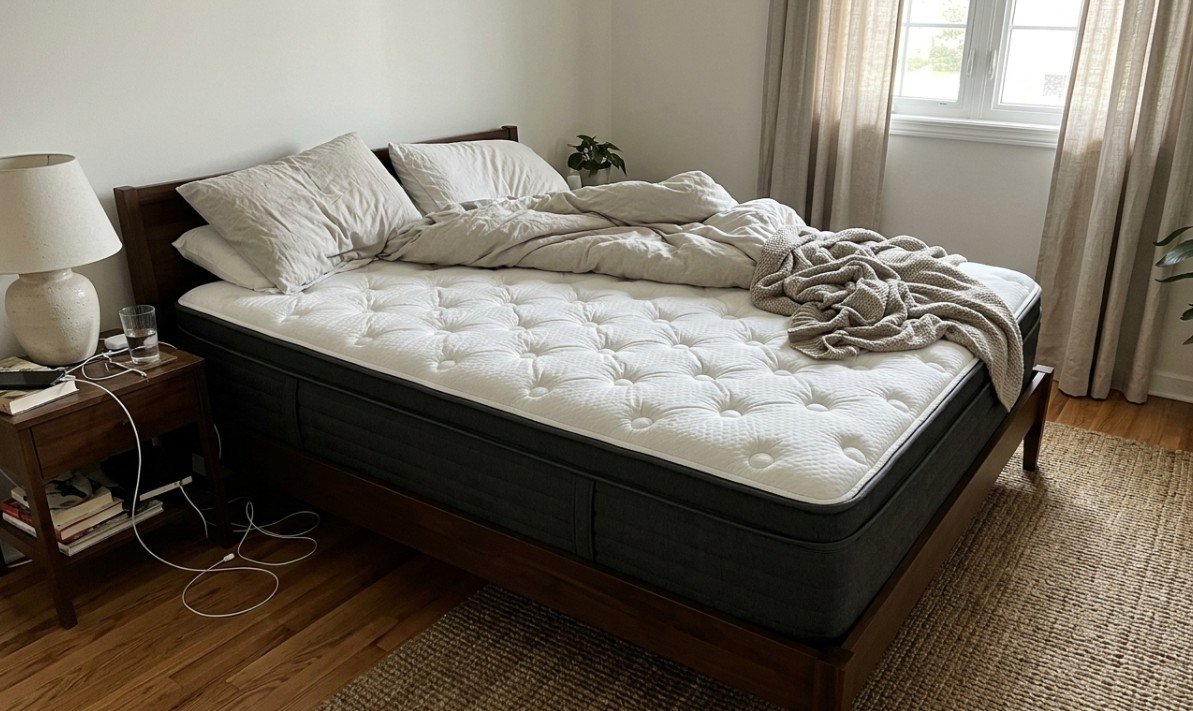
Firm vs soft mattress: a firm mattress feels flat and lets you sink very little, while a soft one lets your shoulders and hips sink in and wraps around your curves. CHOICE links the choice to sleeping position, with soft for side sleepers, medium for back sleepers and firm for stomach sleepers. Neither is better for everyone, and Australia has no standard firmness scale.
Firmness is the end of the scale most people argue about, and most of us land somewhere between the two. This guide sets the extremes side by side on feel, sleeping position, body weight and trade-offs, and says where the evidence runs out. It sits in our Mattress Guides, next to how to choose a mattress.
Firmness words are each maker’s own, and a firm foam mattress can feel quite different from a firm innerspring one. Treat the examples here as general patterns, not measured ratings.
Firm vs soft mattress at a glance
| Question | Soft | Firm |
|---|---|---|
| Surface feel | You sink in and it hugs your shape | Flat, you rest on top |
| Often paired with | Side sleeping | Stomach sleeping |
| Hips and shoulders | More give around them | Little give, can feel hard |
| Moving about | Takes more effort if too soft | Easy to roll and sit up |
| Main risk | Hips sink and support feels weak | Pressure on shoulders and hips |
| Usual label words | Soft, plush | Firm, extra firm |
The sleeping position pairings and the moving-about points come from CHOICE. The risk row is our plain summary of how firmness works, not a measured result.
How sleeping position and body weight change it
CHOICE pairs side sleepers with a soft mattress that contours the body. Back sleepers get a medium one, and stomach sleepers a firm one that keeps the spine aligned. CHOICE also calls comfort subjective, so read the pairings as a starting point.
Body weight shifts the feel. A lighter person sinks less, so a soft mattress may feel firmer to them than the label suggests. A heavier person sinks further, which is why a soft surface can feel unsupportive and a firm one can suit better. Couples who differ a lot in weight should try the mattress together.
What the evidence says
The best-known study is a 2003 trial of 313 adults with chronic low back pain that was not caused by a specific condition. People given a medium-firm mattress reported less pain and disability after 90 days than people given a firm one. There was no soft group, so the trial cannot say whether soft beats firm.
A firm mattress is better for your back.
No firmness has been shown to be best for everyone. The one trial we cite favoured medium-firm over firm, which says nothing either way about soft.
General information, not medical advice. A mattress does not treat or cure back pain. If pain is ongoing or affects your sleep, see a GP or physiotherapist.
Labels, layers and the base underneath
We found no Australian standard for firm or soft. CHOICE says of pillows that there are no clear standards, and that makers set their own definitions. Nothing suggests mattresses are different, so one brand’s soft can feel like another’s medium.
Layers matter as much as the word on the label. A thick soft comfort layer over a firm base feels soft on top yet holds you up underneath. The bed base also counts: on fixed slats or a hard surface, a soft mattress will feel different from the way it did in the shop.
Which should you choose?
| If you | Lean towards |
|---|---|
| Sleep mostly on your side | Soft to medium |
| Sleep mostly on your back | Medium |
| Sleep mostly on your stomach | Firm |
| Change position through the night | Medium, then trial it |
| Share a bed and disagree | Medium, or try it together |
If neither end feels right, the middle is worth a look. See our firm vs medium comparison and plush vs firm for the next step. Our about page explains how we check sources.
For the harder end of the scale, see firm vs extra firm mattress.
Frequently asked questions
Is a firm or soft mattress better?
Neither is better for everyone. The right one depends on how you sleep, how much you weigh and what feels comfortable to you.
Is firm or soft better for side sleepers?
CHOICE pairs side sleeping with a soft mattress that supports and contours the body. It also says comfort is subjective, so try before you buy.
Is a soft mattress bad for your back?
Not as a rule. We found no evidence that soft harms your back, and the main trial compared only firm with medium-firm. For ongoing pain, see a GP or physiotherapist.
What is the difference between soft and plush?
Plush usually describes a deep, cushioned soft feel, and the terms overlap. Neither has an Australian standard, so see what a plush mattress is.
Can you soften a firm mattress?
Often, yes. A topper adds a softer layer on top, and our guide on how to make a mattress softer covers the options.